

🐾 Kopi Luwak: The World's Most Curious (and Debatable) Coffee
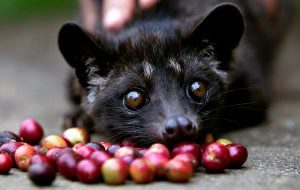 In recent years, Kopi Luwak has attracted the attention of the media and coffee enthusiasts around the world.
But what is so special about it that it is called “the rarest (and most expensive) coffee in the world”?
Let's find out together.
🐒 What is Kopi Luwak?
The name comes from the Indonesian:
-
Kopi = coffee
-
Luwak = palm civet ( Paradoxurus hermaphroditus ), a small arboreal mammal
This animal, widespread in Indonesia and other parts of Southeast Asia, also feeds on ripe coffee berries , which it ingests whole. During the digestive process, the pulp is assimilated , but the seeds (our coffee beans) are expelled whole .
🔬 What happens in the stomach of the Luwak?
The real transformation takes place inside the animal's digestive system .
Gastric enzymes, acting on the external proteins of the bean, modify the chemical profile of the coffee , giving it:
-
a less bitter taste
-
sweeter and softer notes
-
greater roundness in the cup
Once expelled, the beans are collected, carefully washed , dried and then roasted like any other coffee.
📌 Learn more about the chemical composition of Kopi Luwak on Wikipedia
💸 A record-breaking coffee
Kopi Luwak is considered one of the most expensive coffees on the planet.
Prices can reach:
-
€500–600/kg for certified lots
-
€40–50 per cup in high-end coffee shops
☕ In Australia, a coffee shop serves Kopi Luwak for $48 a cup, averaging four sales a week.
In London, an exclusive bar offers a blend of Kopi Luwak and Jamaica Blue Mountain for over €50 a cup.
⚠️ The ethical side of the question
Growing commercial interest has led many companies to exploit the process intensively .
Today, on several plantations:
-
Civets are captured and caged
-
They are fed almost exclusively on coffee berries
-
they often live in conditions of severe stress
Organizations such as PETA and other animal rights groups denounce these practices, urging consumers not to support unethical production .
🔗 Read the investigation: PETA UK – Civets exploited for coffee
🌱 Is there an ethical Kopi Luwak?
Yes. Some producers collect the beans only from free-ranging civets in the wild , without force-feeding them or keeping them in captivity.
🔍 If you decide to buy it:
-
Search for ethical certifications
-
learn about the collection method
-
Be wary of products sold at low prices: they are often not authentic
📊 Comparison with other exclusive coffees
Kopi Luwak is often compared to other fine coffees such as:
| Coffee | Average price per kg | Distinctive feature |
|---|---|---|
| Kopi Luwak | €500–600 | Grains digested by the civet |
| Black Ivory Coffee | €1,000+ | Grains passed through elephants |
| Jamaica Blue Mountain | €200–300 | Unique altitude and climate |
| Hacienda La Esmeralda | €300–400 | Rare microlots from Panama |
✅ Conclusion
Kopi Luwak is undoubtedly a fascinating coffee due to its history, process and rarity.
But beyond the price, it is essential to evaluate the quality and ethics of the product.
💬 If you want to try it, do it consciously.
A rare coffee is not just a question of taste… but also of respect.
0 comments